Less Is More, Darling: How Quiet Luxury Became the Design Language of the Intentional American Home
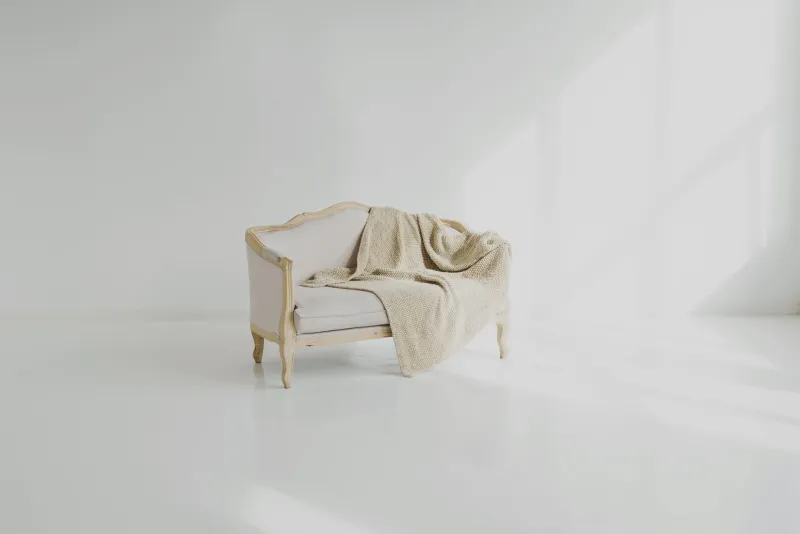
There's a particular kind of room that stops you mid-scroll. No gallery walls crammed floor to ceiling. No neon signs declaring good vibes only. Just a cream linen sofa, a single sculptural vase, and light — actual, considered light — doing the heavy lifting. That room lives rent-free in your head for days.
Welcome to the era of quiet luxury, where restraint is the flex and intentionality is the whole aesthetic.
Across American homes — from Brooklyn brownstones to Austin bungalows to Pacific Northwest farmhouses — a design shift is underway. The maximalist moment, with its bold wallpapers, eclectic clutter, and "more is more" philosophy, is giving way to something slower, softer, and frankly, a little more grown-up. And honestly? We're here for it.
What Even Is Quiet Luxury in Design?
If you've seen the term floating around TikTok or Pinterest lately, you might associate it with fashion — think Loro Piana cashmere, The Row's understated silhouettes, or the kind of outfit that costs a semester of tuition but looks like it was just thrown on. In interior design, the concept translates beautifully.
Quiet luxury in the home is about prioritizing quality materials, neutral or muted palettes, and intentional negative space over decorative excess. It's linen instead of polyester. Solid oak instead of MDF wrapped in wood-look vinyl. A single piece of original art instead of a dozen mass-produced prints. It's the design equivalent of speaking softly and carrying a really, really good throw blanket.
Interior designer Maya Holloway, who splits her practice between Los Angeles and Nashville, describes it this way: "My clients used to come to me with mood boards full of pattern and color layering. Now they're sending me images of empty corners and asking how to make nothing feel intentional. That's a complete 180, and it's exciting to work within."
The Psychology Behind the Shift
So why now? Why are Americans — a culture famously associated with abundance and go-big-or-go-home energy — suddenly craving visual quiet in their living spaces?
A few threads are worth pulling.
First, there's the post-pandemic recalibration. When the home became the office, the gym, the school, and the social hub all at once, visual noise stopped feeling fun and started feeling suffocating. People began craving rooms that could decompress them rather than stimulate them further.
Second, social media's aesthetic pendulum has swung hard. After years of maximalism dominating Instagram feeds — rainbow kitchens, statement ceilings, every surface a canvas — a quiet counter-movement emerged. The algorithm started rewarding stillness. Accounts dedicated to wabi-sabi, Japandi aesthetics, and slow living began racking up millions of followers. Turns out, people were exhausted by the performance of having a Very Cool Home and wanted something that just felt... peaceful.
Dr. Leila Osman, a consumer psychologist based in Chicago, points to something deeper: "There's a well-documented relationship between visual complexity and cortisol levels. Cluttered, overstimulating environments can actually elevate stress responses. When people invest in simpler, more harmonious spaces, they're often unconsciously self-regulating. It's self-care through design."
And then there's the cultural conversation around conscious consumption. Buying fewer things, but better things, aligns with a broader progressive shift toward sustainability, anti-fast-fashion values, and a rejection of disposable culture. Quiet luxury, at its core, is the design expression of buying less and meaning it more.
What Designers Are Actually Saying
We talked to a handful of designers and lifestyle creatives across the country to get a feel for how this plays out in real projects.
Jordan Castillo, a lifestyle influencer and self-taught interior stylist with a following of over 400K on Instagram, recently overhauled her Philadelphia row home in a distinctly quiet luxury direction. "I donated or sold probably 60% of what I owned," she told us. "And honestly, the rooms feel richer now than they did when they were full. That sounds paradoxical, but when you remove the noise, the pieces that remain actually get to shine."
Holloway adds that the material choices are where the magic happens. "Tactility is everything in this aesthetic. You want surfaces that reward touch — raw plaster walls, brushed brass hardware, stone countertops, aged leather. These are materials that develop character over time. They don't look cheaper as they age; they look better. That's the quiet luxury promise."
How to Bring It Home Without a Renovation Budget
Here's where Lazeeva gets practical, because aesthetic aspirations shouldn't require a home equity line of credit. Quiet luxury is achievable at a range of price points — it's more about editing than spending.
Start with a ruthless edit. Before you buy a single thing, remove. Pull everything off your shelves, your coffee table, your walls. Live with the emptiness for a few days. Notice what you genuinely miss and what you don't. That gap is your starting point.
Invest in one anchor piece. Whether it's a quality sofa in a natural fabric, a handmade ceramic lamp, or a piece of original art from a local artist, one genuinely beautiful object does more work than ten mediocre ones. Prioritize tactile quality — things that feel good when you touch them.
Embrace the tonal palette. Quiet luxury lives in whites, creams, warm taupes, dusty sages, and deep earthy neutrals. You don't need to repaint everything — start with textiles. Swap out bright throw pillows for linen ones in warm neutrals. Replace a busy rug with something more understated.
Shop secondhand for quality. Thrift stores, Facebook Marketplace, and estate sales are goldmines for the kinds of solid wood furniture, ceramic pieces, and quality textiles that define this aesthetic — often for a fraction of retail. A mid-century walnut credenza from an estate sale will always outperform a flat-pack alternative.
Let light be your décor. Swap harsh overhead lighting for layered, warm-toned sources — floor lamps, table lamps, candles. Natural light is the ultimate quiet luxury, so keep window treatments sheer where privacy allows.
The Art of Intentional Living
At Lazeeva, we've always believed that art and everyday life aren't separate categories — they inform each other constantly. Quiet luxury, in its most meaningful expression, is really just applied artistry. It's the discipline of a sculptor who knows that what you remove matters as much as what you add.
This design movement isn't about austerity or minimalism for minimalism's sake. It's about creating spaces that actually support the life you want to live — spaces that feel like a deep exhale at the end of a long day, rather than another thing demanding your attention.
The maximalist era gave us permission to be bold and expressive, and that was genuinely valuable. But the quiet luxury wave is giving us something different: permission to slow down, to curate with care, and to find real beauty in the deliberate and the understated.
And in a world that rarely stops shouting, a room that whispers? That might be the most radical design statement of all.