Blank Space Is the New Black: How Intentional Mental Emptiness Unlocks Your Most Creative Work
We've been sold a lie. The lie goes something like this: the more you consume — podcasts, tutorials, inspiration feeds, mood boards, TED Talks — the more creative you become. Input equals output. Stimulation equals innovation. Keep the pipeline full and the ideas will flow.
Except they don't. Not really. Not the good ones, anyway.
Ask any painter, architect, novelist, or product designer who's been doing this long enough and they'll tell you the same thing: their best work didn't come from more. It came from less. From a walk with no destination. From staring at the ceiling for an embarrassingly long time. From what neuroscientists now call activating the default mode network — and what the rest of us might just call getting beautifully, strategically bored.
What Your Brain Is Actually Doing When You Zone Out
Here's the science part, and it's worth sitting with. The default mode network (DMN) is a collection of brain regions that light up when you're not actively focused on a task. For years, researchers assumed this network was basically the brain idling — background noise while the real thinking happened elsewhere.
They were wrong.
Studies from institutions like Stanford and the University of Southern California have shown that the DMN is deeply involved in imagination, future planning, empathy, and — critically — creative synthesis. It's the part of your brain that takes all the disconnected dots you've been collecting and quietly, without your permission, starts drawing lines between them. The shower epiphany? That's your DMN finally getting a word in.
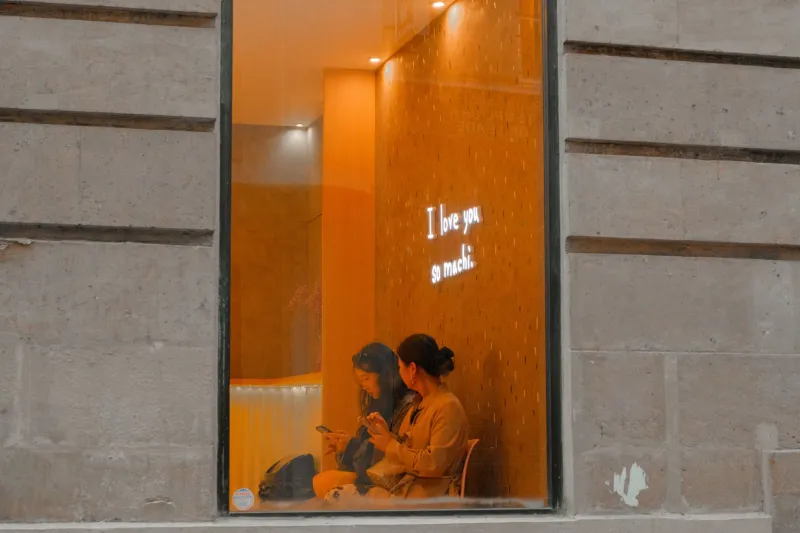
The problem is that we've built modern life specifically to shut the DMN up. Every idle moment gets filled: the two-minute wait for coffee becomes a scroll session, the commute becomes a podcast binge, the lunch break becomes a catch-up on Slack. We've essentially put a gag order on the part of our brain that generates original thought.
Strategic Boredom vs. Mindless Scrolling (This Distinction Matters)
Before you put down your phone and feel virtuous about it, let's be clear: not all emptiness is created equal. Scrolling Instagram for 45 minutes while technically doing nothing is not the same as genuine mental unstructured time, and your brain knows the difference.
Passive content consumption — even when it feels relaxing — keeps your brain in a low-grade reactive state. You're still processing, still reacting, still being directed by an external feed. The DMN doesn't activate because there's always another thing to look at.
Strategic boredom, by contrast, means deliberately removing external inputs and allowing your mind to wander without a destination. It's the difference between an empty room and a room full of furniture you're not allowed to touch. One is genuinely spacious. The other is just frustrating.
Creative professionals who've built this practice into their routines describe it with a specific vocabulary: fallow periods, white space, brain sabbaths. The agricultural metaphor is intentional — land that's left unplanted for a season comes back richer. The same logic applies to creative minds.
How Artists and Designers Are Actually Doing This
In design studios and creative agencies across New York, LA, and Austin, there's a quiet counter-movement to the hustle-optimized workday. Some designers are blocking out what they call "non-meeting, non-output" hours — time that looks unproductive on a calendar but functions as the incubation period for everything that follows.
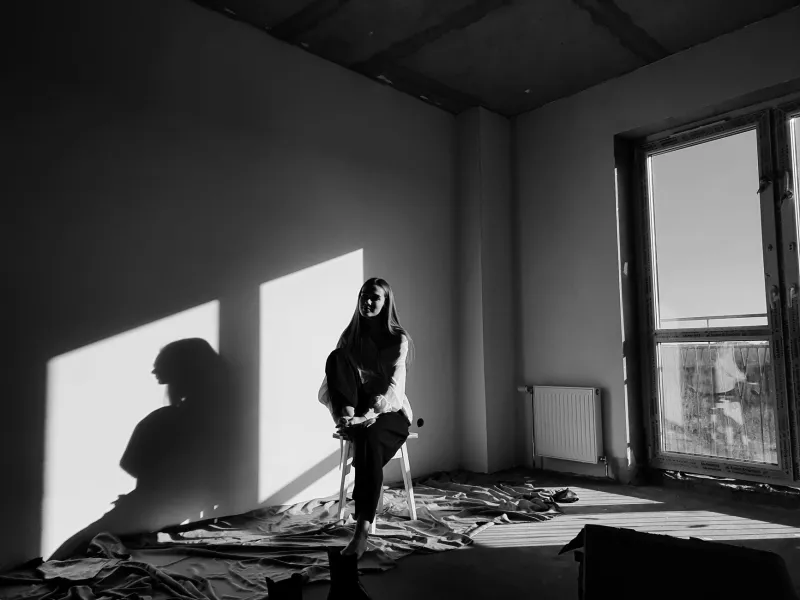
One approach that's gaining traction: the 20-minute analog window. No screens, no notebooks, no structured thinking. Just sitting — on a park bench, in a chair by a window, on the floor of your studio — and letting the mind do whatever it wants. It sounds almost insultingly simple. It also works.
Interior designers, interestingly, apply this principle to physical space as well as mental space. The intentional negative space in a well-designed room — the empty wall, the uncluttered surface, the breathing room between objects — isn't absence. It's active. It gives the eye somewhere to rest and the mind somewhere to land. The same principle translates directly to how we design our mental environments.
Entrepreneurs and startup founders, a group not historically associated with doing nothing, are also coming around. The productivity-at-all-costs culture is showing its cracks, and the ones who've been in the game long enough are recognizing that their best pivots, their most unexpected solutions, didn't emerge from grinding. They emerged from the drive home after the grinding stopped.
Building Your Own Creative Fallow Periods
So how do you actually implement this without it feeling like another item on your to-do list (which would defeat the entire point)? A few approaches that work:
Start micro. You don't need a week-long digital detox to activate your DMN. Ten to fifteen minutes of genuine unstructured time can be enough to shift your mental state. The key is consistency — daily micro-fallow periods compound over time.
Make the environment do the work. Leave your phone in another room. Sit somewhere without a screen in your sightline. Design your physical space to support the mental state you're after — which, again, is a principle as relevant to your living room as it is to your headspace.
Resist the urge to capture everything. One of the subtle ways we undermine fallow time is by immediately reaching for a notebook the moment something interesting surfaces. Let ideas breathe before you pin them down. The ones worth keeping will still be there.
Reframe what "productive" looks like. This might be the hardest part. American work culture has a deeply uncomfortable relationship with stillness — we've conflated busyness with value in ways that are genuinely hard to unlearn. Giving yourself permission to sit with nothing is, paradoxically, one of the more radical things you can do for your creative output.
The Canvas Has to Be Empty Before You Can Paint on It
There's a reason the most enduring metaphor for creative potential is a blank canvas. Not a half-finished one. Not a covered one. A blank one. The emptiness isn't the problem — it's the precondition.
In a culture that treats every surface as an opportunity for content, choosing to leave some of your mental real estate genuinely unoccupied is a kind of quiet rebellion. It's also, increasingly, a competitive advantage. The people generating truly original work aren't the ones who consumed the most. They're the ones who gave what they consumed somewhere to go.
Your brain is not a machine that runs better with more fuel. It's more like a studio — and sometimes the most important thing you can do is clear the floor, open the windows, and wait to see what shows up.