The Uncomfortable Gift: What Happens When You Stop Filling the Silence
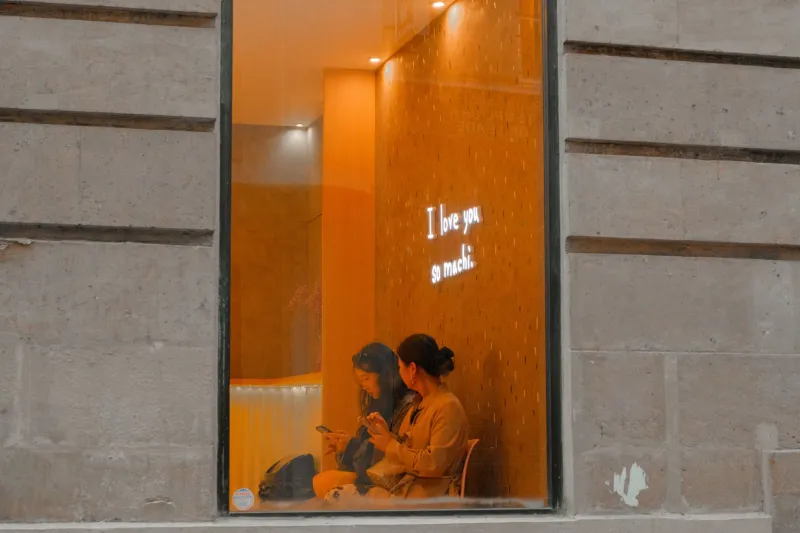
There's a specific kind of panic that sets in when a conversation goes quiet. You know the one. Someone finishes a thought, the air shifts, and suddenly your brain is rummaging through every topic it can find — the weather, that article you half-read, literally anything — just to plug the hole. We've been trained to treat silence like a design flaw. Like something went wrong.
But here's the thing: nothing went wrong. In fact, something might have just gone very, very right.
The Room That Breathes
If you've ever walked into a beautifully designed space and felt instantly calmer — a gallery, a well-curated living room, a boutique hotel lobby — you already understand the power of negative space. Designers call it ma in Japanese aesthetics: the intentional pause between objects that gives the eye somewhere to rest and the mind somewhere to wander. It's not emptiness. It's breathing room.
Conversation works the same way.
Therapist and relationship coach Dana Morales, who works with couples and creative professionals in New York, puts it simply: "Most people are so focused on what they're going to say next that they're not actually listening. The pause is where listening actually happens."
When we silence the reflex to fill every gap, we create space for the other person's words to land. To settle. To mean something. It's the conversational equivalent of hanging one perfect piece of art on a wall instead of cramming it with everything you own.
Why We're So Afraid of It
American culture, in particular, has a complicated relationship with quiet. We reward fast talkers, sharp wits, and the kind of banter that never misses a beat. Think about the rhythm of prestige TV dialogue — everyone's always got a comeback ready. Silence on screen typically means something is very, very wrong. Someone's dying or breaking up or about to confess a crime.
We've absorbed that coding deeply.
Comedian and podcast host Tré Walcott, who's spent years studying the architecture of timing in stand-up, says the silence before a punchline is often more powerful than the joke itself. "The pause is where the audience leans in," he explains. "You're giving them a moment to feel the anticipation. If you rush it, you kill it. The silence is doing work."
That work — that invisible labor of the pause — translates directly to everyday conversation. When you resist the urge to jump in, you're essentially telling the other person: I'm not rushing you. I'm here. That's not awkward. That's intimacy.
The Neuroscience of the Gap
Research backs this up in ways that feel almost counterintuitive. Studies on conversation and cognitive processing suggest that people need somewhere between one and two seconds after hearing something meaningful before they can fully respond to it. When we cut that window short — when we leap into the gap before anyone's had a chance to breathe — we're actually short-circuiting the connection.
Worse, we often interrupt before the most important part gets said. The thing someone was building toward, the real feeling underneath the surface-level words, tends to live at the end of a thought. Rush the response and you'll miss it every time.
Neurologically, silence also activates the default mode network — the part of your brain associated with self-reflection, empathy, and creativity. It's the same network that fires when you're daydreaming or processing an emotional experience. In other words, a beat of quiet in conversation isn't dead air. It's your brain doing its most human work.
Designing for Silence in Your Own Life
So how do you actually practice this? Because let's be real — knowing silence is valuable and not flinching when it shows up are two very different things.
Start small. In your next one-on-one conversation, try waiting a full two seconds after someone finishes speaking before you respond. It will feel like forever. It is not forever. It is two seconds.
Notice what happens in your body during that pause. The urge to fill it is almost physical — a kind of social itch. Sit with it anyway. Let the other person's words actually settle before you start building your reply.
For those who design their physical spaces with intention, consider how your home environment either supports or undermines this kind of presence. Rooms that are visually overwhelming — cluttered, overstimulating, constantly noisy — make it harder to be still in conversation. There's a reason the most intimate dinners tend to happen in quieter, simpler spaces. The environment gives you permission to slow down.
Interior designer and creative director Simone Achebe, who specializes in what she calls "emotionally resonant interiors," says her clients often report that their conversations change when they redesign their living spaces. "When you remove the visual noise, people talk differently. They go deeper faster. The space sets the tone for how people relate to each other."
The Paradox of Productive Discomfort
Here's what nobody tells you about silence: the discomfort is the point.
Authentic connection almost always requires a moment of vulnerability, and vulnerability is uncomfortable almost by definition. The pause in conversation is a tiny, low-stakes version of that. It asks you to stop performing — to stop being the person who always has something clever to say — and just be present with another human being.
That's harder than it sounds in a culture that monetizes personality, optimizes every interaction, and treats social ease as a marker of status. But the connections that actually sustain us, the ones we think about years later, rarely happened during perfectly smooth small talk. They happened in the messy, uncertain, slightly uncomfortable moments when someone said something real and we didn't immediately cover it with noise.
The silence let it breathe.
Leave Some Wall Space
The best rooms, the ones that feel genuinely lived-in and loved, always have some wall space left intentionally bare. Not because the designer ran out of ideas, but because they understood that the empty space is part of the composition.
Your conversations deserve the same respect.
The next time a pause settles in, resist the reflex. Don't decorate it. Don't fill it with something you found on the clearance rack of your nervous brain. Let it sit there, a little awkward, a little open, and see what the other person does with it.
Chances are, something worth hearing is already on its way.