Bored on Purpose: How Doing Absolutely Nothing Became the Creative Flex of the Year
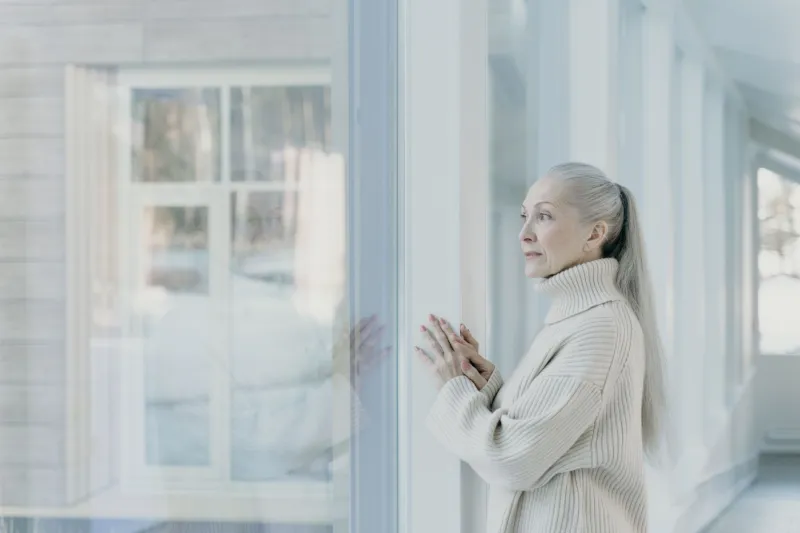
There's a particular kind of panic that sets in when you have nothing to do. No notifications to swipe, no podcast queued up, no task half-finished on your desk. Just... stillness. For most Americans conditioned by a culture that treats busyness as a badge of honor, that feeling is practically unbearable.
But here's the twist: that discomfort? That's exactly where the good stuff lives.
A quiet but unmistakable cultural shift is happening right now, and it's gaining serious traction among creatives, designers, and wellness advocates from Brooklyn lofts to LA studios. It's called strategic boredom — and it's less about doing nothing and more about doing nothing on purpose.
The Brain on Empty (Spoiler: It's Not Actually Empty)
When neuroscientists talk about the "default mode network," they're describing what your brain does when it's not actively focused on a task. Far from going offline, this network lights up with associative thinking, memory consolidation, and — here's the kicker — creative problem-solving.
In plain English: your brain does some of its best work when you stop trying to make it work.
Researchers at the University of Central Lancashire found that people who completed a boring task before a creative one significantly outperformed those who jumped straight into the creative challenge. The bored brain, it turns out, starts reaching. It wanders. It connects dots that focused attention would never bother to link.
This isn't just academic theory. Artists have been living this truth for centuries — they just didn't have the fMRI scans to back it up.
What Creatives Are Actually Saying
Talk to any working designer or visual artist about their process, and you'll almost always find some version of "the walk" or "the shower" — that mundane, unstimulated window where the idea that had been hiding finally shows up uninvited.
Surface-level, it sounds like a happy accident. But more and more creatives are treating it as a practice.
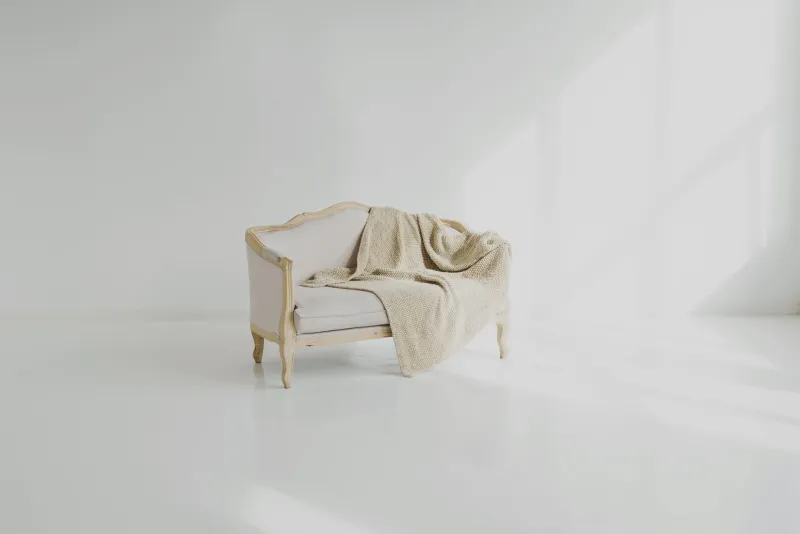
Interior designers, in particular, are some of the most vocal advocates for building intentional emptiness into both their schedules and their physical spaces. The connection makes sense: a room that offers the eyes nowhere urgent to land — no clutter, no competing focal points, no visual noise — creates the same cognitive breathing room as a blank afternoon. It's not coincidence that the rise of minimalist, contemplative home design has tracked almost perfectly alongside the conversation around mental bandwidth and creative burnout.
Designers working in the quiet luxury and biophilic spaces trending right now will tell you that negative space isn't just aesthetic — it's functional. A room designed to let your mind wander is, in a very real sense, a room designed for creativity.
The Guilt Is the Real Problem
Here's what makes strategic boredom genuinely hard for most Americans: we've been culturally programmed to feel guilty about rest that doesn't look like rest. A yoga class counts. A meditation app counts. But sitting on your porch doing absolutely nothing, with no timer and no intention? That feels dangerously close to laziness.
Productivity culture has done a number on us. The glorification of the 5 AM alarm, the 12-tab browser, the back-to-back calendar — these aren't just work habits. They've become identity markers. To opt out feels like falling behind.
But the creatives leading this charge aren't framing boredom as a retreat from ambition. They're framing it as the source of it. The blank canvas before the canvas. The silence before the record plays.
The reframe matters. Calling it "strategic" gives the brain permission to stop performing productivity and start actually generating something.
Building Boredom Into Your Space and Schedule
So how do you actually do this, practically, in a life that doesn't stop demanding things from you?
Start with your environment. If your home is a constant source of visual and sensory input — screens in every room, surfaces covered in stuff, ambient noise always running — your brain never gets a true break. Designating even one corner of your living space as a low-stimulation zone (a chair by a window, a reading nook with nothing to read in it) trains you to associate that space with mental openness. Think of it as designing a room for your subconscious.
Schedule unscheduled time. This sounds absurd, but it works. Block 20–30 minutes in your calendar with no agenda. No podcast, no scroll, no "productive" task. Go for a walk without headphones. Sit with your coffee and don't check your phone. Let the discomfort happen — it usually breaks within five minutes and gives way to something genuinely interesting.
Ditch the guilt narrative. Replace "I'm wasting time" with "I'm doing the invisible work." Because that's what it is. The connective tissue of creative output — the ideas that link, the solutions that surface, the aesthetic instincts that sharpen — none of that happens in a meeting. It happens in the in-between.
Embrace analog boredom. There's a meaningful difference between being bored with your phone in your hand and being bored without it. The former is frustration. The latter is incubation. Try one analog boredom session a day — even five minutes of doing something with your hands (folding laundry, watering plants, doodling without a goal) while your mind goes wherever it wants.
The Bigger Picture
What's really happening with this movement isn't just a productivity hack or a wellness trend. It's a pushback against a particular kind of cultural exhaustion — the feeling that every moment must be optimized, monetized, or at least documented for someone else's consumption.
Strategic boredom is, at its core, a reclamation of interiority. The idea that your inner life — your wandering thoughts, your half-formed ideas, your weird mental tangents — has value even when it's not producing anything for public view.
For creative people especially, that's not a small thing. It's the whole thing.
The most interesting work being made right now — the design that stops you cold, the art that feels like it came from somewhere real, the spaces that make you exhale the second you walk in — almost always has this quality of having been waited for rather than forced. It carries the texture of a mind that was given room to roam.
So maybe the most radical creative act you can commit to this season isn't a new project or a new tool or a new workflow. Maybe it's an afternoon with nothing in it.
Stare at the ceiling. Let your mind go. See what shows up.
It's been waiting.