The Irony of the Performative Unplug: You're Still Doing It for the Likes
The scene is familiar enough to be a cliché by now: someone posts a soft-focus photo of their phone face-down on a linen tablecloth next to a cup of herbal tea, captioned something like "taking some space this weekend 🌿 see you on the other side." Hundreds of likes roll in before they close the app. The irony is so complete it's almost artistic.
We are living through a moment where disconnection has been fully absorbed into the content cycle — where the act of stepping away from social media has become, itself, a form of social media performance. And the most uncomfortable part? Most of us know this. We do it anyway.
How Wellness Ate the Concept of Rest
The digital detox trend didn't come from nowhere. It arrived as a genuine and reasonable response to something real: the mounting evidence that constant connectivity is messing with our attention spans, our sleep, our relationships, our basic capacity for boredom. The instinct to step back was correct.
But wellness culture, which has a remarkable talent for turning self-care into self-improvement content, got hold of it. Suddenly the phone-free weekend needed a ritual. The ritual needed documentation. The documentation needed an audience. And just like that, the thing designed to break the loop became part of the loop.
Now there are entire Instagram aesthetics built around not being on Instagram. The journaling spread photographed before writing in it. The stack of books on the nightstand, artfully arranged, captioned "screen-free evenings this week." The analog alarm clock that exists primarily to signal that you're the kind of person who has an analog alarm clock.
None of this is necessarily fake — the person behind it might genuinely be trying to change their habits. But the performance layer on top of the intention is worth examining, because it changes the nature of the thing.
The Validation Problem
Here's what's actually happening when we announce a digital detox before we take one: we're seeking social permission and reward for a private act. Which means the act isn't fully private. Which means the detox starts with a hit of the exact dopamine mechanism it's supposed to be stepping away from.
This isn't a moral failing — it's just human. We are wired for social validation, and social media has spent the better part of fifteen years engineering that wiring more precisely than any technology in history. Of course we reach for it even when we're trying not to.
But recognizing the pattern is useful, because it points to the thing that actually needs addressing: we're not just addicted to our phones. We're addicted to being witnessed. The phone is just the delivery mechanism. A performative detox doesn't touch the underlying need — it just redirects it through a slightly different channel.
Minimalism Got Gamified, and That's a Problem
There's a broader issue here that goes beyond individual behavior. The wellness and slow living spaces have developed their own competitive dynamics — ones that are remarkably similar to the social media culture they claim to oppose.
Who is more offline? Who has the simpler phone setup? Who went a full month without Instagram? These become status markers, as carefully tracked and displayed as follower counts. The person who hasn't watched TV in a year mentions it within the first five minutes of a conversation. The digital minimalist's home screen — four apps, no notifications, grayscale mode — gets screenshotted and shared.
Minimalism, in this context, stops being about having less and starts being about performing having less. Which is its own kind of accumulation: accumulating credibility, accumulating the identity of someone who has opted out. The scoreboard is still running. You're just scoring different points.
What an Actual Unplug Looks Like (It's Boring, Which Is the Point)
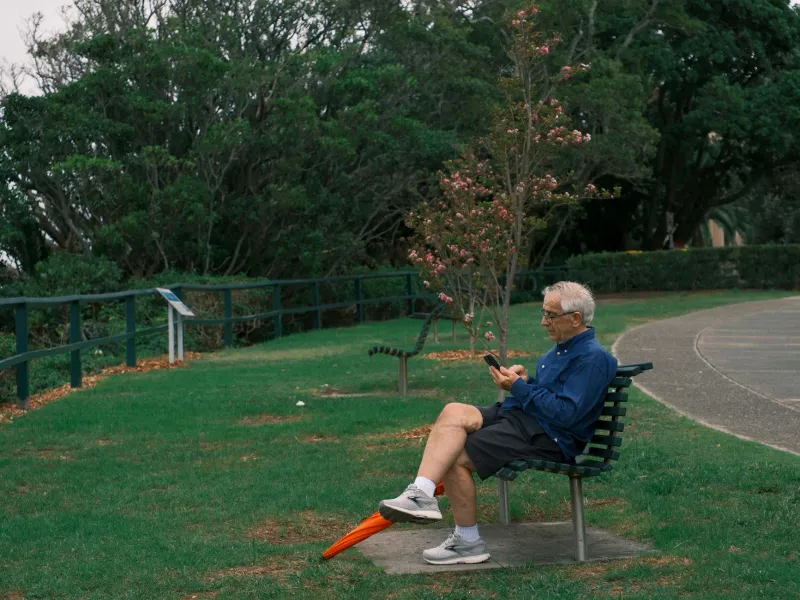
Genuine disconnection is almost definitionally undramatic. You put the phone down. You don't tell anyone. Time passes. You think about other things. Nothing gets documented. No one knows it happened except you.
That's it. That's the whole thing.
The fact that this sounds almost radical right now says something important about where we've landed. The truly countercultural move isn't a curated analog lifestyle — it's just quietly doing the thing without making it a thing.
Some practical, genuinely unglamorous suggestions:
Don't announce it. The moment you post about your upcoming detox, you've already broken the spell. Just... leave. The accounts will be there when you get back. Nobody needs a heads up.
Set a boring, functional boundary instead of a dramatic one. "No phone after 9pm" is more sustainable than "I'm going off the grid for a month." Small, private, consistent habits beat performative grand gestures every time.
Let yourself be bored without reaching for your phone. The discomfort you feel in the first few minutes of not scrolling? That's the thing you're actually trying to address. Sitting with it, even briefly, is the whole point. You don't need to photograph the discomfort.
Notice when you want to document a moment instead of experiencing it. Not as a judgment — just as information. What does the impulse feel like? What are you hoping the documentation will do for you? That question is more interesting than any photo you'd take.
The Freedom in Going Unwitnessed
There's something genuinely liberating about doing things that no one will ever know about. A walk you didn't track. A meal you didn't photograph. An afternoon where you were completely unreachable and nobody panicked because you hadn't announced it. These experiences belong entirely to you — they're not content, not data, not a signal of your values or your lifestyle choices. They're just yours.
That kind of privacy is increasingly rare, and increasingly valuable. And the funny thing is, you can't really share it — which is exactly what makes it worth protecting.