Mess Is the Message: A Defense of the Creative Space That Actually Gets Used
Let's be real about something: the most beautiful studio you've ever seen on your feed probably doesn't belong to someone in the middle of making their best work. It belongs to someone who just cleaned up for a photo shoot, or to a person whose creative output consists mainly of aesthetically pleasing content about being creative. And look, no judgment—that's a whole genre and it has its audience. But it's doing a quiet kind of damage to how the rest of us think our spaces are supposed to look.
The myth of the pristine creative environment has gotten out of hand. And it's time to push back.
The Loft That Never Existed
There's a fantasy version of the artist's studio that lives rent-free in the American imagination. Exposed brick. A single, artfully placed succulent. Natural light cascading over a clean white desk with three perfect objects on it. Maybe a vintage drafting table with nothing on it except one open sketchbook and a single pen.
This space does not exist in the wild. Or rather, it exists briefly, for about forty-five minutes after a deep clean, before it becomes what every real creative space eventually becomes: a physical record of thinking in progress.
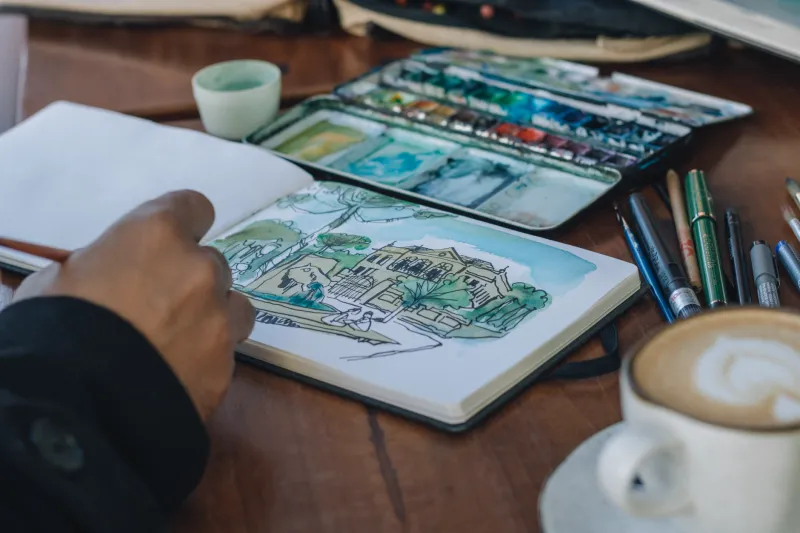
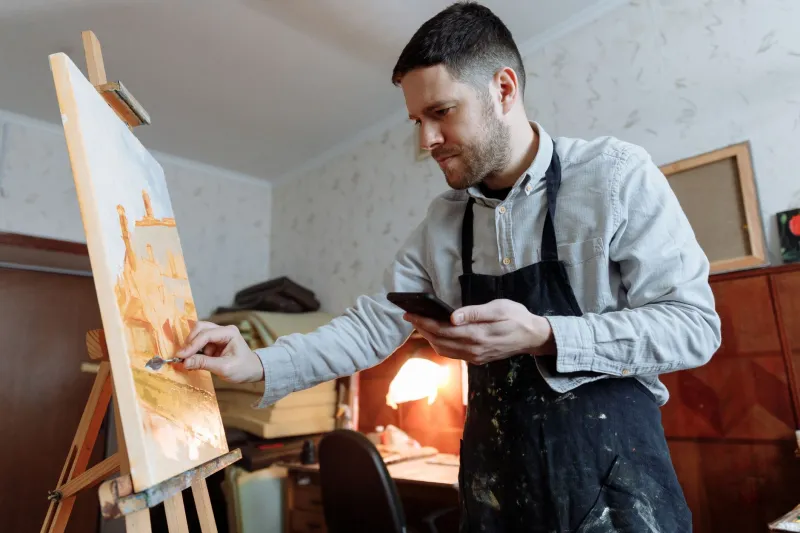
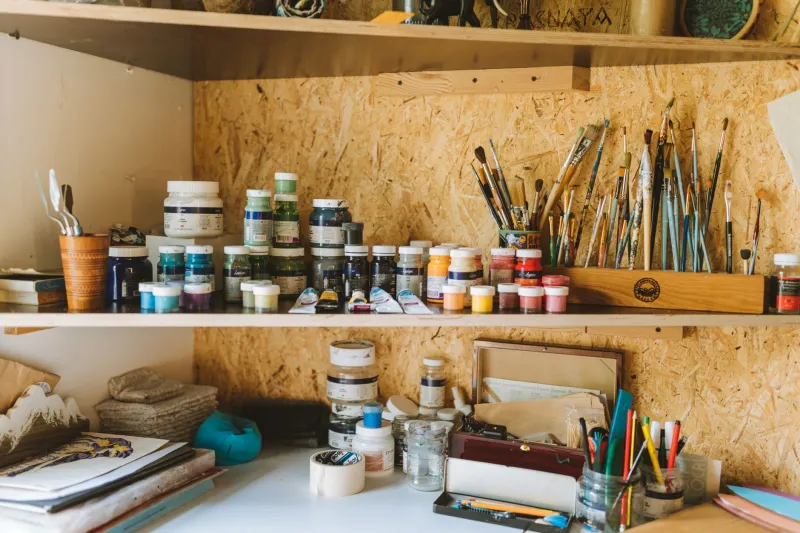
Paint-stained tables. Reference images taped to walls in overlapping layers. Fabric swatches pinned next to printouts next to handwritten notes. Three mugs that started as one mug but somehow multiplied. A stack of books that was supposed to be temporary and has now achieved structural permanence.
This is what a working studio actually looks like. And it's not a problem to solve.
What Clutter Is Actually Telling You
Cognitive scientists have an interesting take on messy environments. Research from the University of Minnesota found that people in disorderly spaces were actually more likely to generate creative, unconventional ideas than those in tidy ones. The visual chaos of a well-used workspace seems to signal to your brain that rules are flexible, that categories are permeable, that unexpected combinations are allowed.
In other words, your mess might be doing some of your creative thinking for you.
Ceramic artist and studio owner Priya Nair, who works out of a converted garage in Albuquerque, laughs when asked about the state of her workspace. "I have a system," she says. "It doesn't look like a system from the outside. But I know exactly where everything is because it's all in the order I last used it. The moment I tidy up, I lose that thread."
This is the thing about creative messes that tidy-workspace evangelists miss: they're not random. They're a kind of external memory. A spatial to-do list. A three-dimensional mood board that updates in real time as your project evolves.
The Instagram Pressure Is Real (And Worth Naming)
It would be dishonest not to acknowledge the social pressure here. If you share your work online—and most working creatives do, because that's how you find your people and build your audience in 2024—there's a constant undercurrent of pressure to make your process look as polished as your product.
Behind-the-scenes content is supposed to be aspirational too, apparently. Your studio tour should be inspiring. Your flat lays should be intentional. Your workspace should suggest the kind of serene creative life that other people can project themselves into.
This is exhausting. And it's worth calling it what it is: performance. A performance that has nothing to do with the quality of the work coming out of that space.
Graphic designer and lettering artist Marcus Webb, based in Brooklyn, made a deliberate choice two years ago to stop cleaning his desk before posting process videos. "The response was insane," he says. "People kept commenting that it made them feel like they could actually do this. Like the work was something a real human made, not a lifestyle brand."
There's something generous about showing the mess. It tells the truth about how creative work actually happens.
Half-Finished Things Are Not Failures
One of the most loaded aspects of the messy studio conversation is the visibility of unfinished work. In the minimalist aesthetic, everything is complete, resolved, and intentionally placed. In a real creative space, there are things in various stages of doneness scattered everywhere—and that's not a sign of a scattered mind. It's a sign of an active one.
Fashion designer and textile artist Simone Achebe keeps what she calls a "conversation wall" in her studio in Los Angeles—a floor-to-ceiling expanse of fabric samples, sketches, and color swatches that represents every project she's currently thinking about, whether it's weeks away from completion or years. "Nothing on that wall is done," she says. "But everything on that wall is alive. When I walk in every morning, I'm walking into a room full of possibilities."
Compare that to the clean desk that greets you with nothing. Which one sounds like a more generative place to spend your creative hours?
Reclaiming Your Space on Your Own Terms
None of this is an argument against organization. It's an argument against aestheticized organization—the kind that prioritizes how a space looks over how it functions for the person inside it.
Your creative space should serve your process, not your feed. It should hold your current obsessions, your reference materials, your mistakes and experiments and the things you're not sure about yet. It should look like you in the middle of thinking, not like a showroom designed to make other people feel something.
If your studio is messy, it's probably because you're in there making things. And that, honestly, is the whole point.
Clean it when you need to. Organize it when the chaos stops serving you. But stop apologizing for the evidence of your own creative life. It's not a flaw in your space. It's a feature of your process.