The Slow Burn: Why Waiting on Your Creative Dreams Is Actually the Move
We live in a world that has genuinely lost the plot when it comes to patience. You can stream any album ever recorded in thirty seconds. You can have a canvas delivered by tomorrow morning. You can watch a tutorial, buy the supplies, and post your first attempt before the sun goes down. And yet—here's the thing nobody's saying out loud—all that speed might be quietly killing your creative potential.
Delayed gratification used to be a concept reserved for personal finance seminars and parenting books. But increasingly, artists, designers, and makers are reclaiming it as something else entirely: a creative philosophy. A competitive edge. A love language for the work itself.
The Marshmallow Test, But Make It Art
You've probably heard of the Stanford marshmallow experiment—kids offered one marshmallow now or two if they wait. The follow-up research suggested that the kids who waited tended to do better across a bunch of life outcomes. Psychologists have spent decades unpacking why. But the creative application of that same principle is wildly underexplored.
When you hold off on starting a project—not out of fear, but out of genuine, intentional patience—something interesting happens. The idea doesn't disappear. It deepens. It accumulates context. It starts pulling in references from your daily life that you never would have connected if you'd just rushed to execute.
Illustrator and surface pattern designer Maya Okafor, based out of Portland, Oregon, describes it this way: "I used to start every project the moment I got excited about it. And the work was fine. But when I started giving myself a two-week incubation period—just sketching loosely, not committing—the final pieces became something I actually wanted to live with."
That phrase is worth sitting with. Work you actually want to live with.
The Art Supply Problem Nobody Talks About
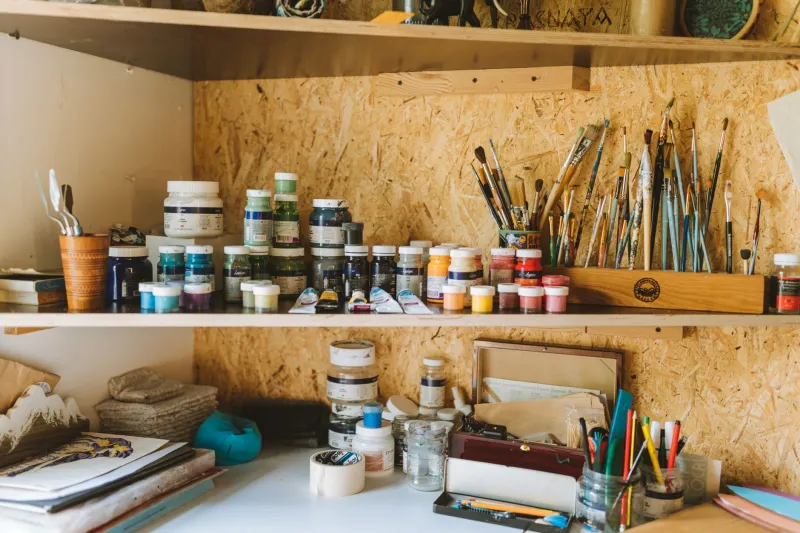
Here's a specific version of this that almost every creative person knows intimately: the art supply spiral. You get inspired. You go down a rabbit hole. Suddenly you've got a full Procreate brush pack, three new sketchbooks, a set of gouache paints, and a linen canvas—and zero finished work to show for any of it.
The acquisition feels like creativity. It mimics the emotional high of making something. But it's actually a shortcut around the harder, more rewarding work of sitting with an idea until you know what it actually needs.
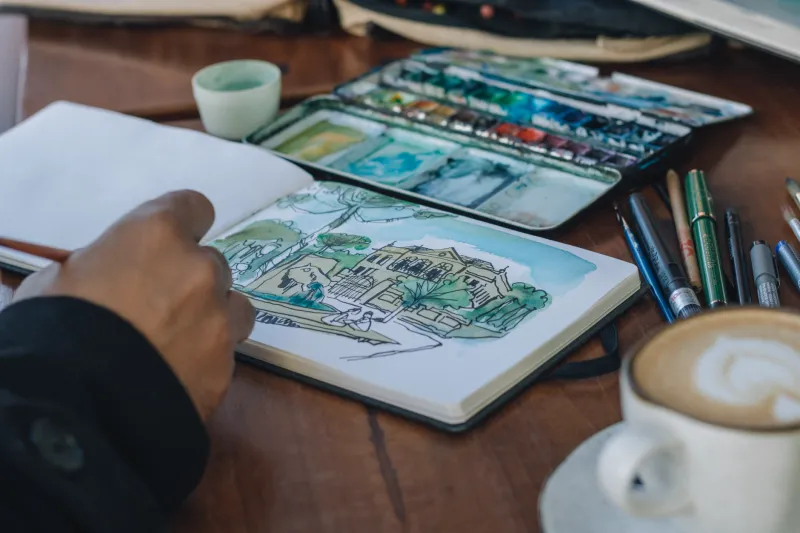
Designer and brand strategist Jonah Reyes, who runs a small studio in Austin, made a rule for himself a few years back: he's not allowed to buy new materials for a project until he's filled at least half a sketchbook with research and rough concepts. "It sounds strict," he admits, "but what it does is force me to work with constraints. And constraints are where my best ideas come from."
This isn't about deprivation. It's about earning the tools.
Waiting As a Form of Artistic Confidence
There's a confidence that comes from rushing—the bravado of the person who posts their first attempt and doesn't look back. And honestly? That energy has its place. But there's a different kind of confidence that only comes from waiting. It's quieter. It's the confidence of someone who knows their idea well enough to defend it, develop it, and let it evolve without panic.
Artists who credit delayed action with their breakthrough moments often describe a similar internal shift. The waiting period transforms them from someone reacting to inspiration into someone in relationship with it. And relationships, as we all know, require time.
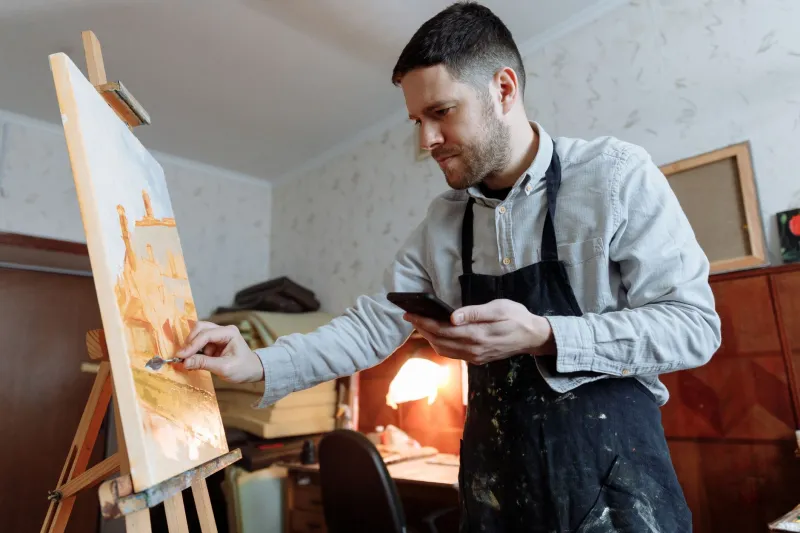
Painter and muralist Dani Flores, whose large-scale public works have appeared in Chicago and Denver, spent almost eight months sitting with the concept for what became her most recognized piece before she ever touched a wall. "People thought I was stuck," she says. "I was actually just listening. The work told me when it was ready."
The Content Consumption Side of This Equation
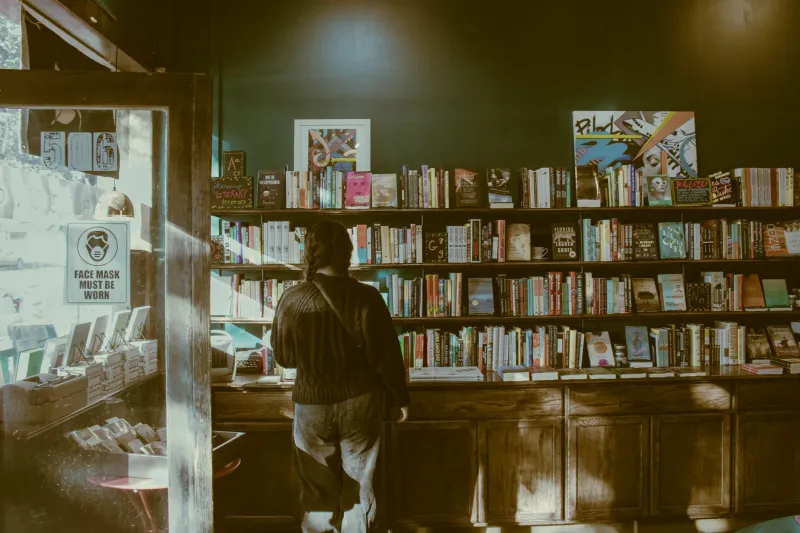
It's not just about making—it's also about consuming. The same principle applies to how we take in art, design, and culture. Doom-scrolling through Pinterest boards and Instagram feeds feels like research. Sometimes it is. But more often, it's a way of outsourcing your own taste to an algorithm.
When you slow down your consumption—when you sit with one artist's work for a week instead of grazing across hundreds in an afternoon—you start to notice things. You develop opinions. You disagree with choices. You get inspired in ways that are genuinely yours, not just a reflection of what's trending.
This is how taste gets built. Slowly. Deliberately. With friction.
The Practical Case for the Long Game
None of this means you should wait forever. Perfectionism and patience are not the same thing, and it's worth being honest with yourself about which one you're practicing. The goal isn't to delay indefinitely—it's to delay purposefully.
Some practical ways people are doing this:
- Keeping an idea journal with a 30-day rule. If an idea still feels exciting a month after you write it down, it's worth pursuing. If it doesn't, you saved yourself a lot of energy.
- Separating the inspiration phase from the execution phase. Give each one its own dedicated time and don't let them bleed together.
- Finishing something before starting the next thing. Radical, we know.
The creative culture we live in is obsessed with output. With posting, shipping, launching, sharing. And there's real value in momentum and iteration. But the most durable creative work—the stuff that lasts, that means something, that earns its place in the world—almost always has a slow burn somewhere in its origin story.
Waiting isn't weakness. It's the quiet, unglamorous work of becoming someone whose art is worth the wait.