Everything Pre-Owned Is Pre-Loved: The Quiet Poetry of Thrifted Things
Photo: Unknown authorUnknown author, CC0, via Wikimedia Commons
Walk into a big-box furniture store in any American suburb and you'll see it: the same boxy farmhouse console, the same gray sectional, the same mass-produced "vintage" sign that says VINTAGE. Then walk into a thrift store two towns over and find a chipped ceramic owl, a 1974 armchair in burnt orange velvet, and a record sleeve with someone's love note scribbled on the back. One of these shopping trips gives you furniture. The other gives you a story.
Secondhand is having a moment, but calling it a trend undersells what's happening. The US resale market has swelled into a multi-billion-dollar economy, yes — but the more interesting shift is why. Increasingly, people aren't thrifting because they have to. They're thrifting because they're choosing. And what they're choosing is narrative texture in an age of flat-pack sameness.
The Curators of the Pre-Owned
Spend enough time in the secondhand world and you start meeting a certain type: not bargain hunters, exactly, more like archivists with a budget. People who can tell you which decade produced the best dresser joinery, or why the ceramics at the back of the Goodwill on Division Street are always worth a dig.
Take the vintage resellers who've turned thrifting into a genuine craft. The good ones aren't flipping for a quick buck — they're matchmakers. They talk about finding a mid-century credenza "a home," and they mean it. When a piece sells, they'll often ask what room it's going into. There's a pride in placement, a sense that objects have destinies and resellers are just routing the traffic.
Collectors operate on an even longer timeline. The vinyl obsessive hunting a specific 1962 pressing isn't just buying music — she's buying proximity to a person, a year, a pressing plant in Scranton. Secondhand objects come with ghosts, and for a certain kind of person, the ghosts are the point.
What Mass Production Erased
Here's the uncomfortable truth about brand-new, mass-produced goods: they're designed to have no history. A fresh-out-of-the-box dresser knows nothing. It hasn't survived a divorce, a cross-country move, a kid's marker phase. It carries no scratches from a dog who's since gone to the great backyard in the sky.
A thrifted dresser, by contrast, arrives with a résumé. The water ring on the top? Somebody's Sunday iced tea, circa whenever. The wobbly leg someone repaired with the wrong shade of stain? A repair, which means a person who decided this thing was worth saving. Secondhand goods are pre-loaded with evidence of care. You can't manufacture that at scale, which is precisely why it matters.
This is also why the anti-thrift argument — that it's just "someone else's junk" — misses the point entirely. Junk is an object without a story. The whole secondhand economy runs on the opposite premise: that almost nothing is junk if you find its people.
Building a Home With a Bibliography
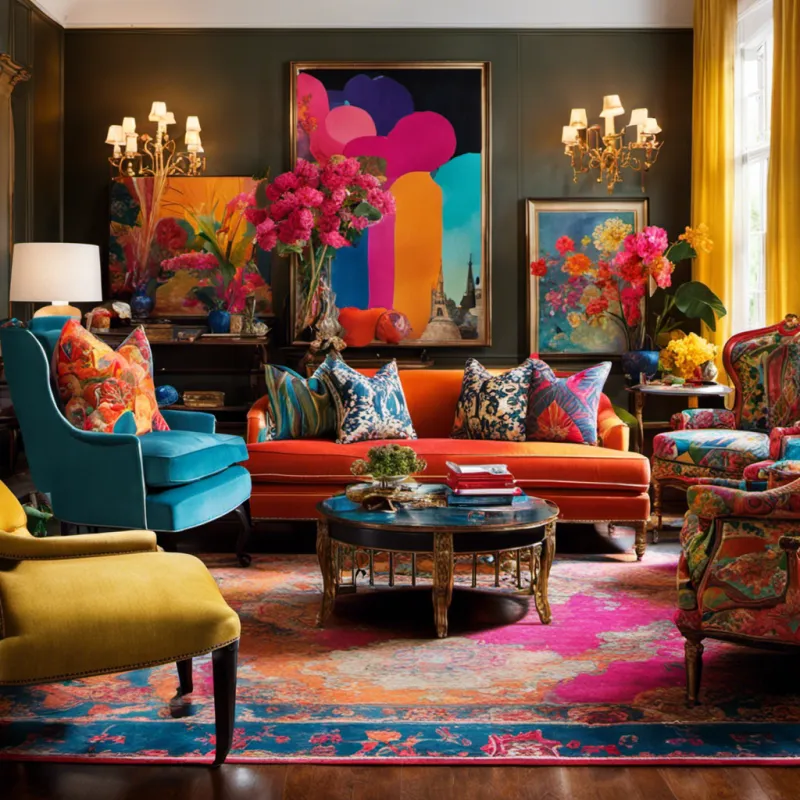
There's a design philosophy buried in all this, and it runs counter to nearly everything trending on your feed. Trend-driven interiors optimize for now — the look that photographs well this season. Thrift-built interiors optimize for eventually. You furnish slowly. You say no a lot. You wait years for the right dresser, and when it appears at a church sale in Sacramento for forty dollars, you carry it home yourself and it becomes the room's whole personality.
The result is a home that reads like a bibliography — sources cited, each entry a little different. No algorithm could assemble it, because no algorithm knows about the owl. Your guests won't be able to buy the look at Target, and that's not a bug. That's the entire value proposition.
The Sustainable Footnote (That's Actually the Headline)
Yes, secondhand shopping keeps furniture and clothing out of landfills and dodges the carbon cost of new manufacturing. That's real, and it matters. But the environmental argument alone never built anyone's personality. People keep thrifting for the same reason they keep old letters: because objects that have been loved carry love forward, and new objects are still waiting to learn how.
So the next time you pass a cluttered thrift store with the hand-painted sign and the mysterious smell, consider going in. Somewhere between the mismatched mugs and the orphaned end tables, there's a piece of your home's future story — lightly used, generously loved, and completely impossible to restock.