Strange Is the New Sexy: How Your Weirdest Hobby Became Your Greatest Creative Asset

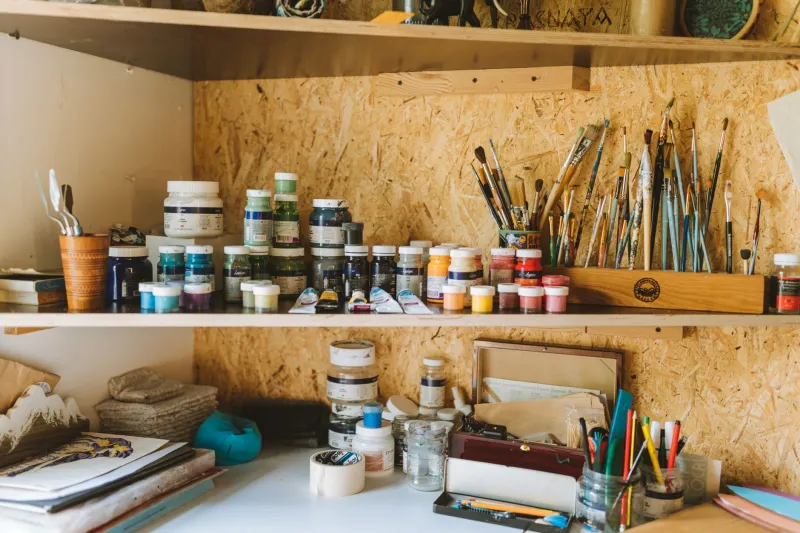
Photo by Photo by Vitaly Gariev on Unsplash on Unsplash
There's a woman in Portland who spends her weekends recreating historical bread recipes from medieval manuscripts. She photographs the loaves on century-old linen, writes about the grain trade in fourteenth-century France, and has somehow — improbably, wonderfully — amassed over 200,000 followers who cannot get enough of it. She didn't optimize for growth. She didn't hire a content strategist. She just cared, deeply and specifically, about something most people would consider obscure to the point of absurdity.
And that's exactly why it works.
We're living in a strange cultural moment where the algorithmic pressure to be broadly appealing has never been stronger, and yet the people actually cutting through the noise are doing the opposite. They're going narrow. They're going weird. They're building entire identities — and in many cases, entire careers — around the things they love that will never, ever trend on a mainstream platform.
The Tyranny of the General
For a long time, the conventional wisdom was that you needed to sand down your edges to succeed. Be relatable. Appeal to the widest possible audience. Don't make people feel excluded by being too specific. This logic made a certain kind of sense when mass media was the only game in town — when you had three TV networks and a handful of magazines deciding what was worth covering.
But that world is gone, and the old playbook went with it.
The internet — for all its very real dysfunction — did one genuinely radical thing: it made it possible for every obscure interest to find its people. The guy who collects vintage Soviet space program memorabilia? His people are out there. The woman who makes tiny felt replicas of famous architecture? Her people are not only out there, they're willing to pay real money for her work. The specificity that once felt like a social liability has become, in the attention economy, the most powerful thing you can offer.
Because here's what general can never give you: genuine connection. You can like something broadly. You can only love something specifically.
Quirk as Currency
Let's talk about what's actually happening when someone builds a community around an unusual passion. They're not just sharing content — they're creating a signal. A very particular signal that says: this is who I am, this is what I care about, and if you care about it too, you've found your people.
That signal does something no amount of polished, focus-grouped content can replicate. It creates genuine belonging. And belonging, it turns out, is what people are desperately hungry for right now.
Take the resurgence of niche hobbyist culture in the US over the last few years. Sourdough bread-making, yes, but also competitive puzzle-solving, antique tool restoration, hand-dyeing fabric with foraged plants, amateur radio operation, and the inexplicably thriving world of competitive moss gardening. These aren't activities that anyone's lifestyle magazine is going to feature. But they've generated passionate, tight-knit communities that have real staying power — precisely because the barrier to entry filters out the casual and leaves only the genuinely obsessed.
And the genuinely obsessed? They show up. They buy things. They talk about it constantly. They bring their friends.
The Identity Architecture of Weird
There's something deeper happening here than just marketing strategy, though. When you commit to a strange, specific passion — when you stop hedging and just own the thing that lights you up — you're doing something that's actually quite rare: you're building an identity from the inside out.
Most of us construct our public selves by reading the room. We figure out what's acceptable, what's admirable, what will get us social approval, and we curate accordingly. It's exhausting, and it produces a kind of identity that's technically functional but fundamentally hollow.
The person who's all-in on their weird hobby has opted out of that negotiation. They've decided that the thing they genuinely love matters more than the approval of people who don't get it. That's not just creatively liberating — it's psychologically clarifying in a way that's hard to overstate.
Artists and designers have understood this for a long time. The most enduring creative voices aren't the ones who chased what was popular; they're the ones who pursued their specific obsessions with such commitment that eventually the culture had to come to them. The aesthetic becomes recognizable because it comes from a real place, not a trend report.
Practical Weirdness: Making the Leap
So how do you actually do this? How do you take the thing you love — the thing you've maybe been embarrassed about or kept quiet at dinner parties — and lean into it fully?
Start by resisting the urge to translate it. The instinct, when you share something niche, is to immediately explain why it's actually relatable, actually universal, actually not that weird. Fight that instinct. The weirdness is the value. Let it be weird.
Then find the intersection between your passion and your existing skills. The medieval bread woman isn't just making bread — she's a talented food photographer and a meticulous researcher. The hobby is the content, but the craft is what makes the content worth consuming. What skills do you already have that can serve your strange love?
Finally, commit to consistency over virality. The communities built around niche passions don't explode overnight. They grow slowly, one genuinely interested person at a time. That's not a bug — that's the feature. Slow growth built on real interest is infinitely more durable than a viral moment that attracts people who were never really your people anyway.
The Bigger Picture
There's a cultural argument here that goes beyond personal branding. In a media landscape increasingly dominated by AI-generated content optimized for engagement metrics, the human weird is becoming genuinely precious. The things that are strange and specific and deeply personal are the things that algorithms can't replicate, because they come from actual lived experience, actual obsession, actual love.
Your weird hobby isn't a quirk to apologize for. It's a form of creative resistance. It's proof that you exist as a specific human being with a specific inner life — and in 2024, that's not nothing. That might actually be everything.
So go ahead. Tell people about the thing. The obscure thing, the embarrassing thing, the thing you've been saving for the right moment. The right moment is now, and your people are waiting.