Let Your Brain Wander: The Surprisingly Brilliant Case for Doing Absolutely Nothing Useful

There's a moment — maybe you've had it — somewhere between rinsing the shampoo out of your hair and reaching for a towel, when a fully-formed idea lands in your head like it was dropped from orbit. You weren't trying. You weren't brainstorming. You were just... standing there, mildly zoning out, probably thinking about nothing more profound than whether you need more conditioner.
And yet: breakthrough.
This isn't a coincidence. It's neuroscience. And honestly? It might be the most important design principle you can apply to your everyday life.
Your Brain Has a Secret Mode — And It Only Activates When You Step Back
Researchers call it the Default Mode Network, or DMN — a constellation of brain regions that light up not when you're focused and grinding, but precisely when you aren't. Think of it as your brain's background processing system, quietly running complex simulations, making unexpected connections, and stress-testing half-formed ideas while your conscious mind is elsewhere.
Dr. Marcus Raichle at Washington University first identified the DMN in the early 2000s, and since then, neuroscientists have linked it to creativity, self-reflection, empathy, and what researchers call "spontaneous cognition" — the kind of loose, associative thinking that produces genuinely novel ideas.
Here's the catch: the DMN doesn't activate on command. You can't schedule it into a Google Calendar block labeled "Creative Thinking, 2–3pm." It needs the thing that modern American life is most aggressively designed to eliminate — unstructured mental space.
In other words, it needs you to be a little bit bored.
Why "Productive Boredom" Is the Design Principle You're Missing
When we talk about home design at Lazeeva, we often think about space — how physical environments shape mood, behavior, and creativity. But there's a parallel conversation to be had about temporal design: how you architect your time, and whether you've left any actual breathing room in it.
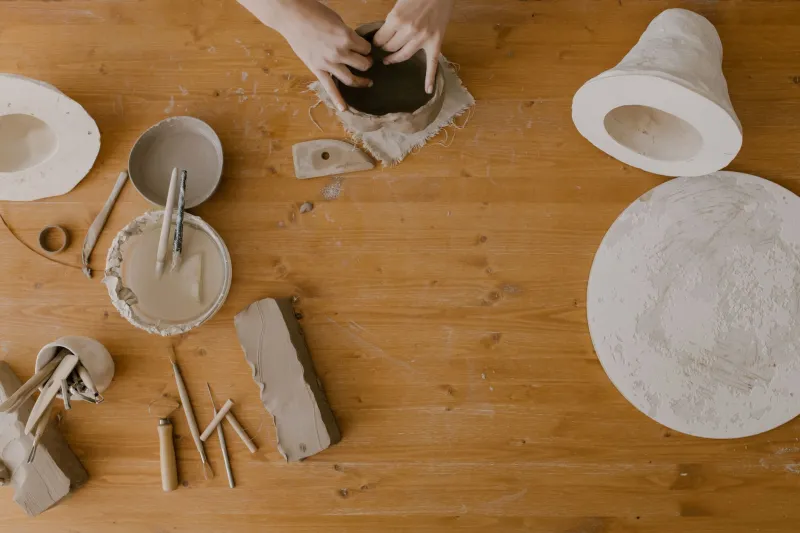
Artist and ceramicist Mara Solano, based out of Portland, Oregon, describes her most fertile creative periods as the ones that look the least productive on paper. "I'll spend a whole afternoon pulling weeds in my backyard and feel almost guilty about it," she says. "Then I'll go back to my studio and suddenly I know exactly what I've been trying to figure out for weeks. The garden did that. Not the sketchbook."
This tracks with what researchers describe as "incubation" — a phase in the creative process where the problem needs to be released from active attention before the brain can actually solve it. You're not wasting time. You're composting it.
Entrepreneur and product designer Theo Nakamura, who runs a small design consultancy in Austin, Texas, builds what he calls "friction time" into his weekly schedule. "I take drives with no destination and no podcast," he explains. "Just me, the road, and whatever my brain wants to chew on. Some of my most profitable ideas — ideas that turned into actual products — came from those drives. Not from whiteboards."
The Activities That Work Best (And Why)
Not all low-effort activities are created equal when it comes to activating the DMN. The sweet spot is what psychologists call "low-cognitive-demand tasks" — things that require just enough attention to keep you from spiraling into anxiety, but not so much that they monopolize your mental bandwidth.
Think:
- Long walks without headphones. The rhythmic movement is grounding, the visual stimulation is gentle, and there's nothing demanding a response from you.
- Driving familiar routes. Your hands know what to do. Your brain is free to roam.
- Gardening or light housework. Repetitive physical tasks are practically a meditation technique at this point.
- Cooking a recipe you know by heart. The kitchen as a creative incubator — underrated.
- Showering or bathing. The warm water, the white noise, the physical comfort — it's basically a sensory reset button.
What doesn't work: scrolling your phone. Even mindless social media browsing keeps your brain in reactive mode, responding to micro-stimuli rather than generating original thought. The DMN needs genuine quiet — not just the appearance of rest.
Designing "Boring" Into Your Space and Routine
Here's where the home and design angle gets genuinely interesting. If your environment is engineered for constant stimulation — every surface covered, every room wired for sound, every idle moment met with a screen — you're architecturally blocking your own creativity.
Some intentional design moves worth considering:
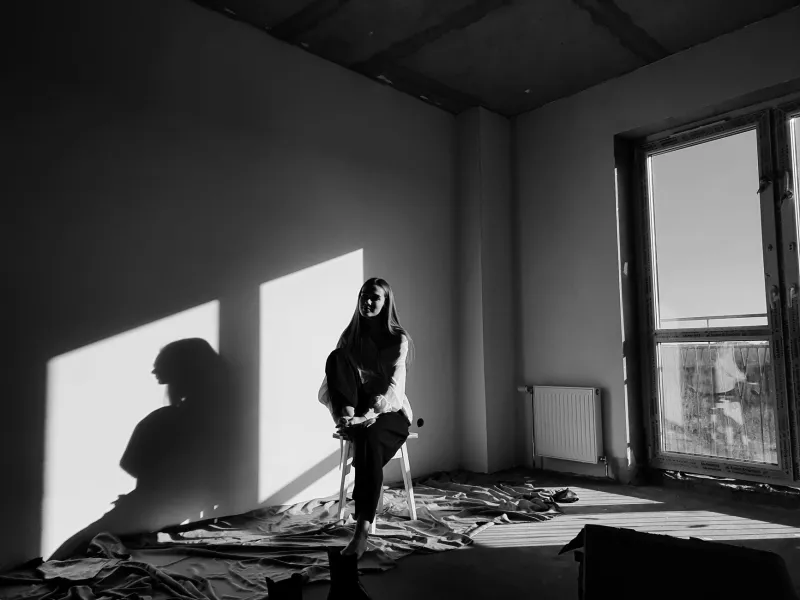
Create a low-stimulation zone. It doesn't need to be a meditation room (though, honestly, go for it). Even a single chair near a window, kept free of devices and visual clutter, can serve as a psychological signal to your brain: this is where we drift.
Embrace negative space in your home. Minimalism isn't just an aesthetic — it's a cognitive environment. Rooms with breathing room and fewer visual demands give your eyes (and your brain) somewhere to rest without landing on a task.
Protect the commute. If you drive to work, try going radio-free twice a week. If you take public transit, skip the podcast occasionally. These in-between moments are prime DMN territory, and we've been plugging them up with content.
Schedule the unscheduled. Block thirty minutes in your week and label it literally anything except a task. A walk. A bath. Sitting on the porch. Your brain will figure out what to do with the space — and it will likely surprise you.
The Cultural Permission Slip We All Need
There's a reason this feels countercultural. American productivity culture has spent decades convincing us that idle time is wasted time, that rest is laziness with better PR, and that the hustle is the point. We've internalized a metrics-based view of our own minds — if you're not outputting, you're underperforming.
But creativity has never worked that way. The artists, designers, writers, and thinkers who produce work that actually matters have always known that the making happens in the quiet spaces between the making. The canvas needs the negative space. The music needs the rests. The brain needs the drift.
Strategic boredom isn't a retreat from ambition. It's the most sophisticated creative tool available to you — and it costs absolutely nothing except the willingness to stop filling every moment with something.
So the next time you catch yourself staring out the window, resisting the urge to grab your phone, doing nothing in particular — let it happen. Your brain isn't offline.
It's working its best shift of the day.